Fire Extinguisher Hoses: Types, Uses, and Selection Guide

Introduction
Fire safety equipment plays a crucial role in protecting lives, property, and industrial assets. Among the various components of a fire extinguisher, the fire extinguisher hose is one of the most important. It serves as the connection between the extinguishing agent and the discharge nozzle, enabling accurate and controlled firefighting operations.
Whether used in commercial buildings, industrial facilities, marine vessels, or residential environments, fire extinguisher hoses must be durable, reliable, and capable of performing under emergency conditions. This guide explores the different types of fire extinguisher hoses, their applications, and how to select the right hose for your requirements.
What Is a Fire Extinguisher Hose?
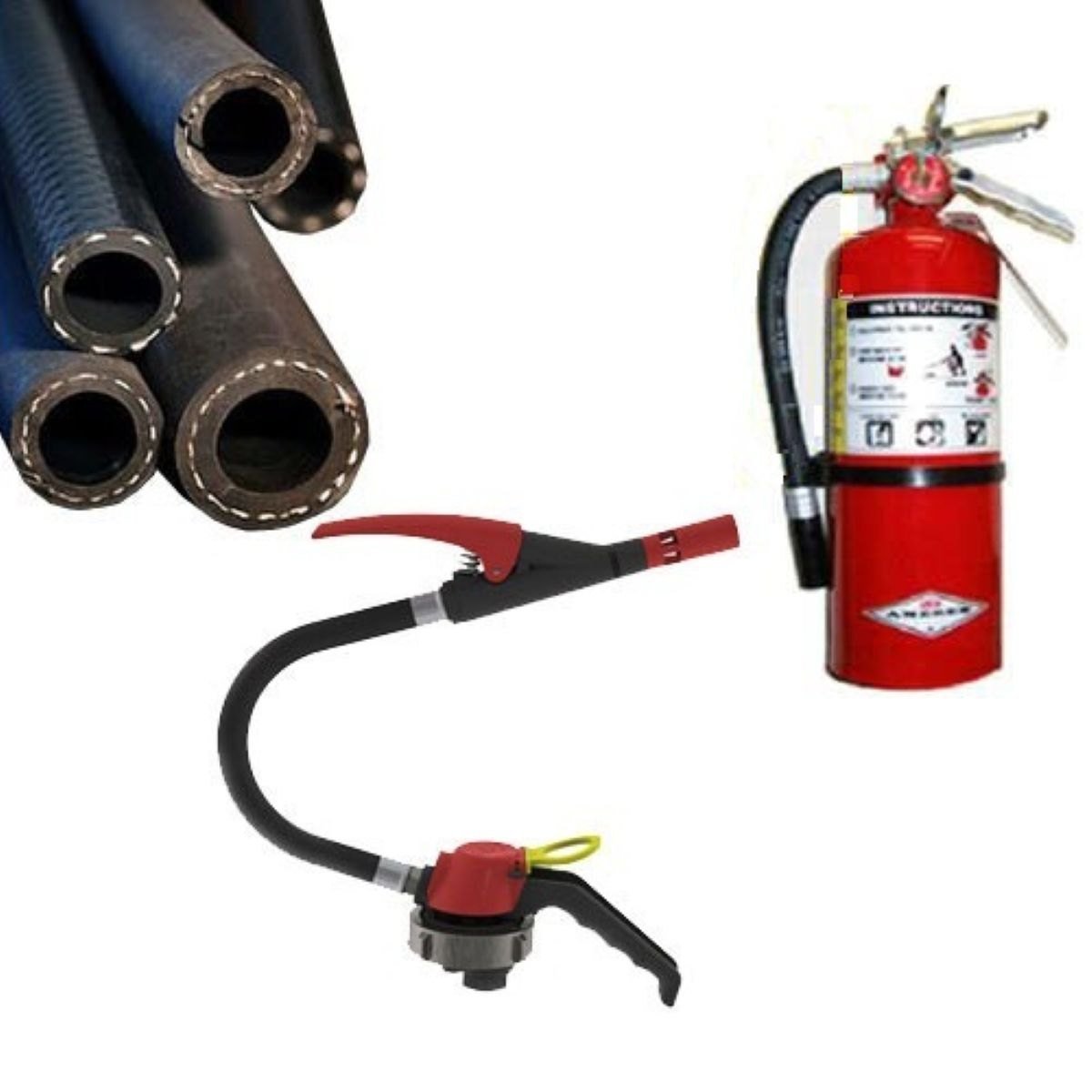
A fire extinguisher hose is a flexible tube designed to carry and direct the extinguishing agent from the extinguisher cylinder to the nozzle. It allows users to aim the extinguishing medium precisely at the source of the fire while maintaining a safe distance.
These hoses are typically manufactured from high-quality rubber, thermoplastic materials, or reinforced synthetic compounds that can withstand pressure, abrasion, and environmental exposure.
Importance of Fire Extinguisher Hoses
A fire extinguisher is only as effective as its ability to deliver the extinguishing agent efficiently. The hose plays a vital role by:
- Directing the extinguishing agent accurately
- Allowing greater reach and flexibility
- Maintaining proper discharge pressure
- Ensuring user safety during firefighting operations
- Improving fire suppression effectiveness
A damaged or low-quality hose can significantly reduce extinguisher performance and compromise safety during emergencies.
Types of Fire Extinguisher Hoses
1. Rubber Fire Extinguisher Hoses
Rubber hoses are among the most commonly used hose types due to their durability and flexibility.
Features:
- Excellent flexibility
- High abrasion resistance
- Long service life
- Suitable for various extinguisher types
Applications:
- Commercial buildings
- Industrial facilities
- Warehouses
- Manufacturing plants
2. Reinforced Rubber Hoses
These hoses contain textile or synthetic reinforcement layers to handle higher operating pressures.
Features:
- Enhanced pressure resistance
- Improved durability
- Excellent kink resistance
- Reliable performance in demanding environments
Applications:
- Industrial firefighting systems
- Marine applications
- Heavy-duty fire extinguishers
3. Thermoplastic Fire Extinguisher Hoses
Thermoplastic hoses offer lightweight construction and excellent chemical resistance.
Features:
- Lightweight design
- Corrosion resistance
- Flexible handling
- Cost-effective solution
Applications:
- Portable fire extinguishers
- Commercial establishments
- Residential safety equipment
4. High-Pressure Fire Extinguisher Hoses
Designed for extinguishers operating at elevated pressures.
Features:
- High burst strength
- Reinforced construction
- Superior safety performance
- Resistance to pressure fluctuations
Applications:
- CO₂ extinguishers
- Industrial fire suppression systems
- Specialized firefighting equipment
Common Uses of Fire Extinguisher Hoses
Commercial Buildings
Office complexes, shopping centers, hotels, and educational institutions rely on fire extinguishers equipped with reliable hoses for emergency response.
Industrial Facilities
Factories and processing plants use heavy-duty fire extinguisher hoses capable of withstanding harsh operating environments.
Marine Industry
Ships, offshore platforms, and marine vessels require fire extinguisher hoses resistant to moisture, saltwater exposure, and challenging environmental conditions.
Oil and Gas Sector
High-risk facilities require durable hoses capable of delivering extinguishing agents quickly and effectively during fire emergencies.
Residential Applications
Portable extinguishers used in homes often feature lightweight thermoplastic or rubber hoses for ease of use.
How to Choose the Right Fire Extinguisher Hose
Selecting the appropriate fire extinguisher hose is essential for ensuring safety and optimal performance.
1. Pressure Rating
Choose a hose designed to handle the operating pressure of the extinguisher system. High-pressure applications require reinforced hose construction.
2. Hose Material
Consider the operating environment and extinguishing agent compatibility. Rubber and reinforced hoses are ideal for demanding applications, while thermoplastic hoses suit lighter-duty use.
3. Flexibility Requirements
Flexible hoses improve maneuverability and make it easier to direct the extinguishing agent toward the fire source.
4. Environmental Resistance
Select hoses resistant to:
- UV exposure
- Moisture
- Chemicals
- Abrasion
- Extreme temperatures
5. Compliance with Safety Standards
Ensure the hose meets relevant industry and fire safety standards for quality and reliability.
6. Application Type
Different industries have different requirements. Marine, industrial, commercial, and residential applications may require specific hose characteristics.
Benefits of High-Quality Fire Extinguisher Hoses
Enhanced Fire Safety
Reliable hoses ensure rapid and effective discharge of extinguishing agents during emergencies.
Long-Term Durability
Premium materials resist wear, pressure damage, and environmental degradation.
Improved Operational Efficiency
Flexible and well-constructed hoses enable faster response and better fire control.
Reduced Maintenance Costs
High-quality hoses require fewer replacements and repairs over time.
Increased User Confidence
Emergency responders and facility personnel can rely on durable hoses when every second counts.
Maintenance Tips for Fire Extinguisher Hoses
Regular inspection and maintenance help ensure readiness during emergencies.
Best Practices:
- Inspect hoses for cracks, cuts, or wear.
- Check fittings and couplings for damage.
- Ensure the hose remains free from kinks and blockages.
- Replace damaged hoses immediately.
- Follow manufacturer-recommended inspection schedules.
- Include hoses in routine fire safety audits.
Proper maintenance significantly extends service life and ensures dependable performance.
Why Choose a Trusted Fire Extinguisher Hose Manufacturer?
A reputable manufacturer uses high-quality raw materials, advanced production processes, and strict quality control measures to ensure reliable products. Certified fire extinguisher hoses undergo pressure testing, durability assessments, and safety inspections before reaching customers.
By choosing a trusted manufacturer, businesses can ensure compliance with safety standards while improving overall fire protection capabilities.
Conclusion
Fire extinguisher hoses are a critical component of every fire safety system. Their ability to deliver extinguishing agents quickly, accurately, and safely makes them essential for commercial, industrial, marine, and residential applications.
Understanding the different hose types, their uses, and selection criteria helps organizations choose the right solution for their fire protection needs. Investing in high-quality fire extinguisher hoses enhances safety, reliability, and long-term performance, ensuring readiness when emergencies occur.